The Durable Athlete Audit: 3 Tests to Assess Your Baseline
You can’t manage what you don’t measure. Here is how to audit your strategy for athletic longevity.

You cannot build a system on a weak foundation.
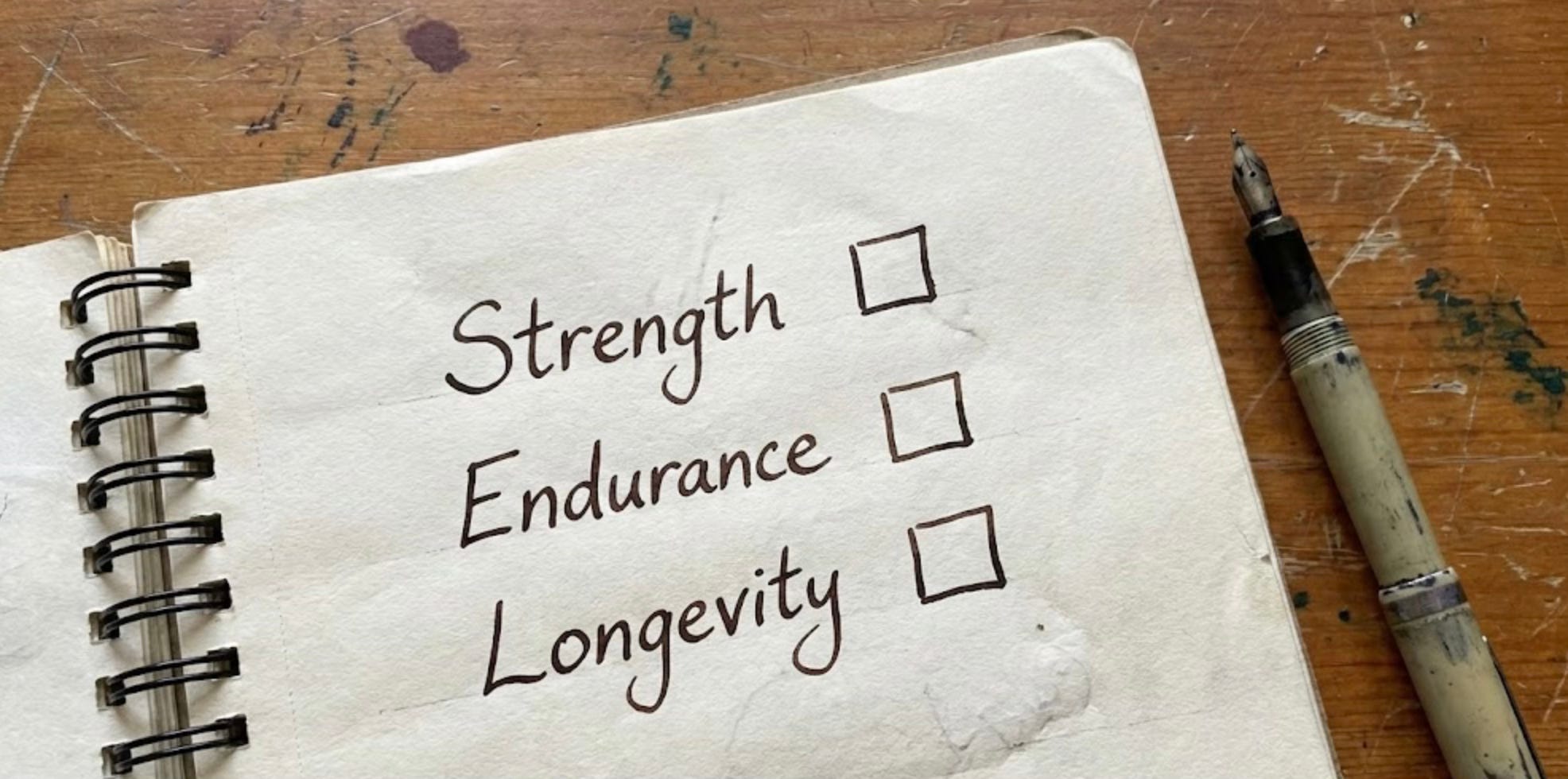
In the previous article, we defined the pillars of a Durable Athlete: Strength (Foundation), Endurance (Engine), and Longevity (Strategy).
Now, we stop talking and start testing.
Most athletes train what they enjoy and ignore what they need. They guess at their fitness based on how they “feel” or what the clock says. We don’t guess. We assess.
Below are three diagnostic standards—one for each capability. They are pass/fail. They require only honesty. Do them now.
TEST 1: THE FOUNDATION CHECK (Strength)
The Capability: Structural Integrity
Before we load the spine with a barbell or a heavy ruck, we must ensure the body can achieve the position. This isn’t about how long you can hold it; it is about the degree of your range of motion. If you cannot get into the position unloaded, you have no business loading it.
The Test: The Squat Depth Assessment
Stand with feet shoulder-width apart. Drop into the deepest squat you can maintain without holding onto anything.
The Standard: You must be able to sit with your hips below your knees (breaking parallel) while keeping your heels flat on the ground and your chest up.
The Why: This tests ankle mobility and hip mechanics simultaneously. Depth is the metric. If you have to lift your heels or round your back to hit depth, your structure is compromised.
The Verdict:
Pass: You have the mechanics to load. You are ready for the 5-RM Protocols.
Fail: You have a mobility restriction. You must prioritize ankle and hip mobility before adding heavy weight.
TEST 2: THE ENGINE CHECK (Endurance)
The Capability: Metabolic Efficiency & Work Capacity
Many athletes believe they have a “good engine” because they can endure 45 minutes of suffering. That isn’t an aerobic base; that’s just a high pain tolerance. Actual metabolic efficiency means having a massive aerobic floor and the ability to clear lactate when you push the pace.
To audit your engine, we need to test both ends of the spectrum.
Assessment A: The Aerobic Floor (Zone 2) Go for a 60-minute ruck (20-30lbs) or a flat run at a conversational pace.
The Standard: You must complete the full 60 minutes with less than 10% of the session drifting into Zone 3. If your heart rate creeps up even while maintaining a steady pace, your aerobic base is porous.
The Why: This tests “Cardiac Drift.” If you can’t hold a steady physiological state for an hour, you don’t have endurance; you have a ticking clock.
Assessment B: The Threshold Check (Zone 4) A few days later, perform a 5K Time Trial (or a 1.5-mile test if you are new to speed work).
The Standard: Run it at the maximum pace you can sustain. Record your average heart rate and pace.
The Why: This establishes your “Functional Threshold.” It gives us the data point we need to calculate your zones accurately, so you stop guessing where “Hard” actually is.
The Verdict:
Failed Assessment A? You lack a base. Prioritize Zone 2 volume.
Failed Assessment B? You lack top-end power. You need Polarized intervals.
Passed Both? Your engine is balanced. You are ready for advanced periodization.
TEST 3: THE STRATEGY CHECK (Longevity)
The Capability: Range of Motion & Maintenance
Longevity is the “Why.” It’s about keeping the machine running for decades. The biggest threat to the aging athlete is the gradual loss of range of motion, which eventually leads to the “old man shuffle” and injury.
TEST 3: THE STRATEGY CHECK (Longevity)
The Capability: Movement Quality & Recovery
Longevity is the “Why.” It is about keeping the machine running for decades. We assess this through two lenses: Function (can you move?) and Recovery (are you repairing?).
Assessment A: The Dynamic Walkout (The Movement Audit)
Stand with feet shoulder-width apart. Hinge at the hips to place your hands on the ground. Walk your hands out into a high plank position. Perform a “Upward Facing Dog” (arching the spine). Walk your hands back to your feet and stand up.
The Standard: You must complete the entire sequence—hinge, walkout, and return—keeping your legs straight with minimal knee bend.
The Why: This stress tests the posterior chain's flexibility and simultaneously assesses your trunk and shoulder stability. It reveals if your tissue is “glued tight” or dynamic.
Alternative Regression: The Sit-and-Rise Test. Sit on the floor and stand back up without using your hands or knees.
Assessment B: The Sleep Audit (The Recovery Audit)
Look at your sleep data tracker or your smartphone for the last 14 days.
The Standard: How many nights did you get more than 7.5 hours of sleep?
Passing Grade: 10 out of 14 nights (70% compliance).
The Why: Sleep is the only time your body releases the hormones required to repair tissue and consolidate motor learning. If you are training hard but sleeping 6 hours, you aren’t building a Durable Athlete; you are just breaking yourself down slowly.
The Verdict:
Failed Movement? Your chassis is stiff. Prioritize Mobility protocols in the Longevity tab.
Failed Sleep? You are under-recovered. No training plan can make up for a sleep deficit. Fix your Recovery environment immediately.
THE DIAGNOSIS
Look at your results across all three pillars.
Failed Strength? Prioritize mechanics.
Failed Endurance? Prioritize efficiency.
Failed Longevity? Prioritize maintenance and sleep.
Don’t try to fix everything at once. Pick the one test you failed the hardest. That is your priority for the next 4 weeks.
READY TO FIX THE GAPS? Now that you know your weak link, you need the protocol to fix it. I am documenting the complete system in my upcoming book, The Durable Athlete (Jan 2026). Subscribe below to get the solutions delivered to your inbox.